

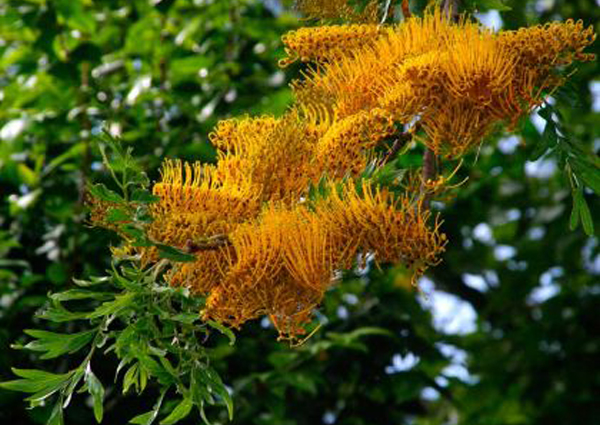
Grevillea robusta ‘Silky Oak’
Large, fast growing, majestic, evergreen tree that, in late spring bears a profusion of large, bright orange, toothbrush like flowers.
Enquiry Form
Got questions?
Feel free to send us an enquiry.
Large, fast growing, majestic, evergreen tree that, in late spring bears a profusion of large, bright orange, toothbrush like flowers. Ideal as a shade, shelter or timber tree for parks and farms. The flowers attract nectar-feeding birds. Due to it’s large size at maturity, this tree should not be planted near buildings. Prefers a sunny site in moist, well drained soil. Tolerates pollution, light frost and short periods of drought.
Other plants you might like...

Evergreen, rainforest tree with very attractive foliage that has copper-coloured undersides. A mass of creamy-white, scented flower spikes appear in Summer.
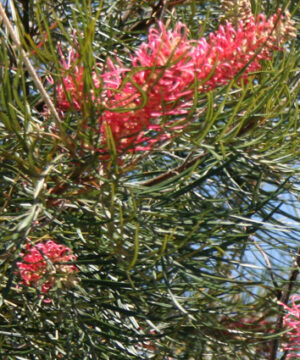
A medium height shrub with deeply divided silver-grey foliage, which bears large, stunning, rosy coloured flowers for most of the year. Bird attracting. H:3-4m
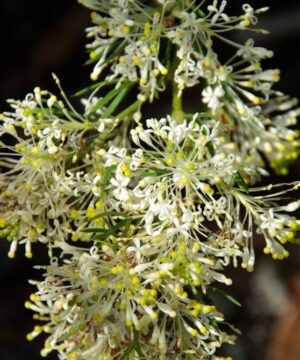
Prostrate shrub with soft foliage and masses of cinnamon scented white flowers during Spring. An ideal groundcover for rockeries.
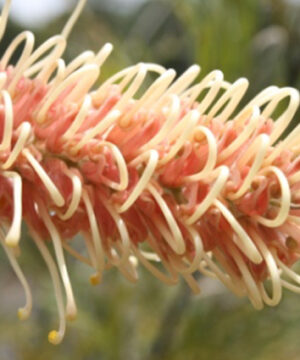
A fast-growing shrub producing masses of pale apricot flowers in Winter and Spring. Drought tolerant. Coastal suited. Bird Attracting. H:3m W:1.5m
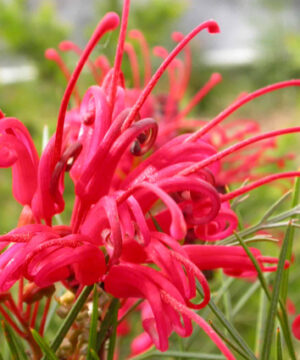
A medium sized shrub with dark green fern-like leaves bursting into flower in Spring with firey-red red spider flowers. Bird attracting. H.1.5m W, 2m
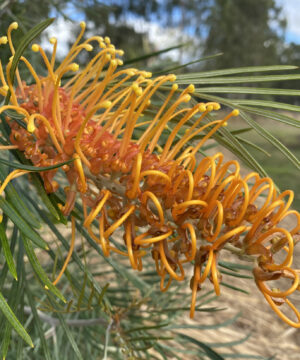
A naturally bushy shrub with bright, honey-coloured flowers appearing all year round. Bird attracting. Frost and drought tolerant. Full sun. H:2m W:2m
A dwarf spreading shrub with deep green, narrow leaves producing a profusion of deep pink and white flowers from Autumn to Spring. H.1m W. 1.5m
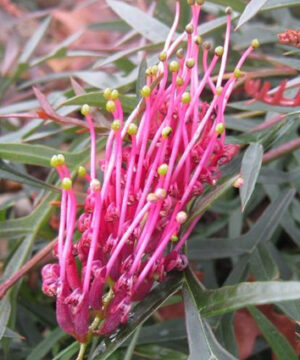
Groundcover, bronze new growth, amazing display of large, claret-red toothbrush flowers in the warmer months. H. 30cm W. 3m
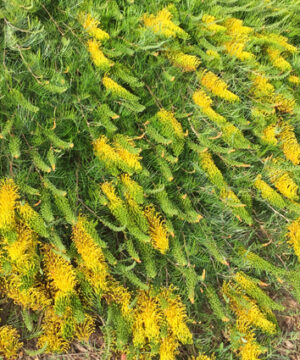
Pendulous branches covered with fine, glossy light-green leaves give the shrub the appearance of a shimmering cascade. An abundance of 10-20cm long, golden, rocket-shaped flowers appear during Summer and Autumn. H 50cm W.2-3m
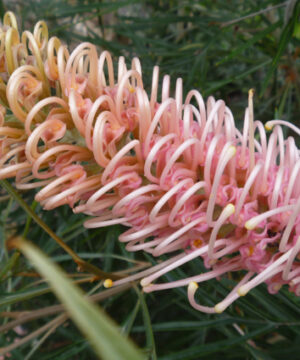
This Grevillea has flowers so large that they arch down - looking like a pink flamingo feeding. Flamingo will attract nectar feeding birds all year round. H. 3m W. 3m
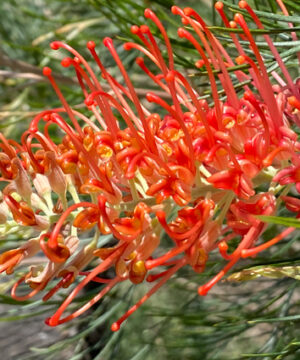
Vibrant and gorgeous burnt-orange, frangranced flowers adorn this grevillea and contrast well with its bright green leaves. Bird attracting. H. 2.5m W. 2.5m
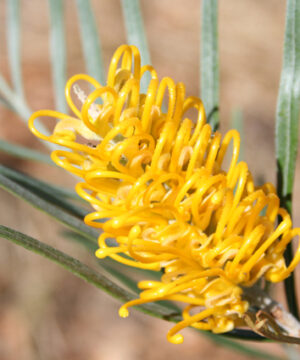
Its not a citrus but the flowers are the colour of ripe lemons. Flowering for most of the year it will attract honey loving birds. Just stunning!
